

February 24, 2026
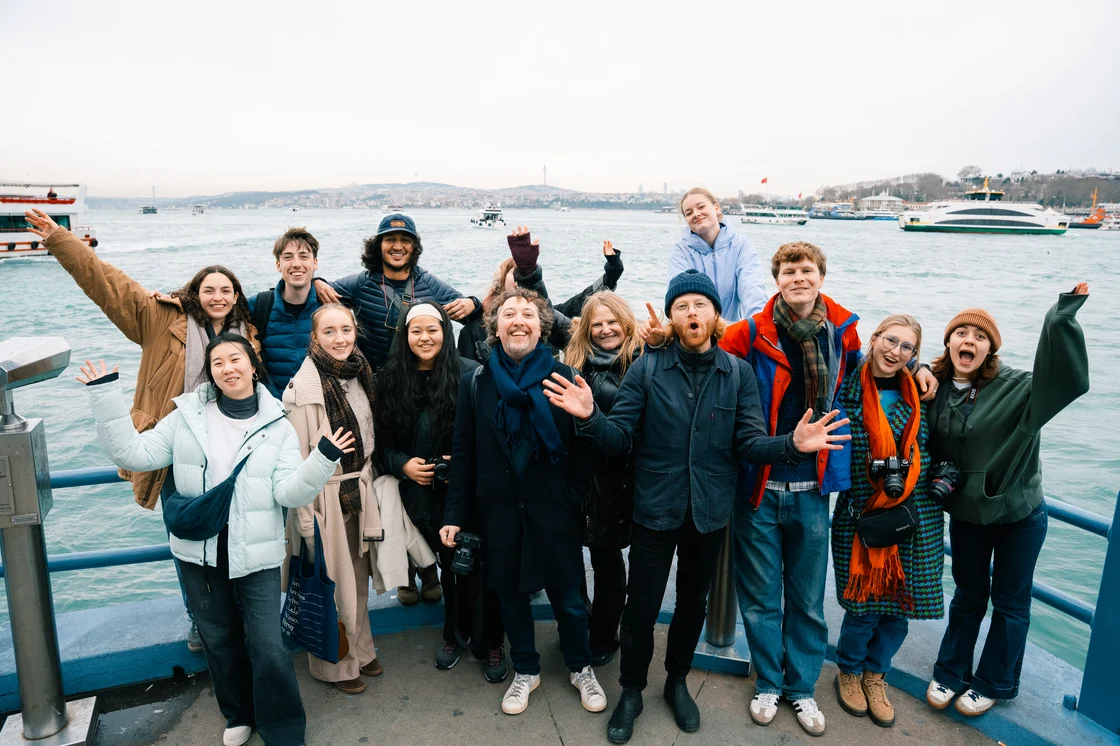
It is our pleasure at Baret to present a review of our Scholars' time in Istanbul and the Middle East. As the beginning of their spring semester, their month in Istanbul and beyond represented the beginning of the end of their journey. Talk to the Scholars and they will express amazement and shock that they are already more than halfway around our globe. There is gratitude, of course, always gratitude: for the chance they have to explore their passions, and for the lifelong friends they are making.
Each Baret month is packed with excursions, speakers, and Fellowships, so we've compiled here a list of all the speakers they met, site visits they went on, and Fellowships they experienced, replete with links to documentaries, student blogs, and more!
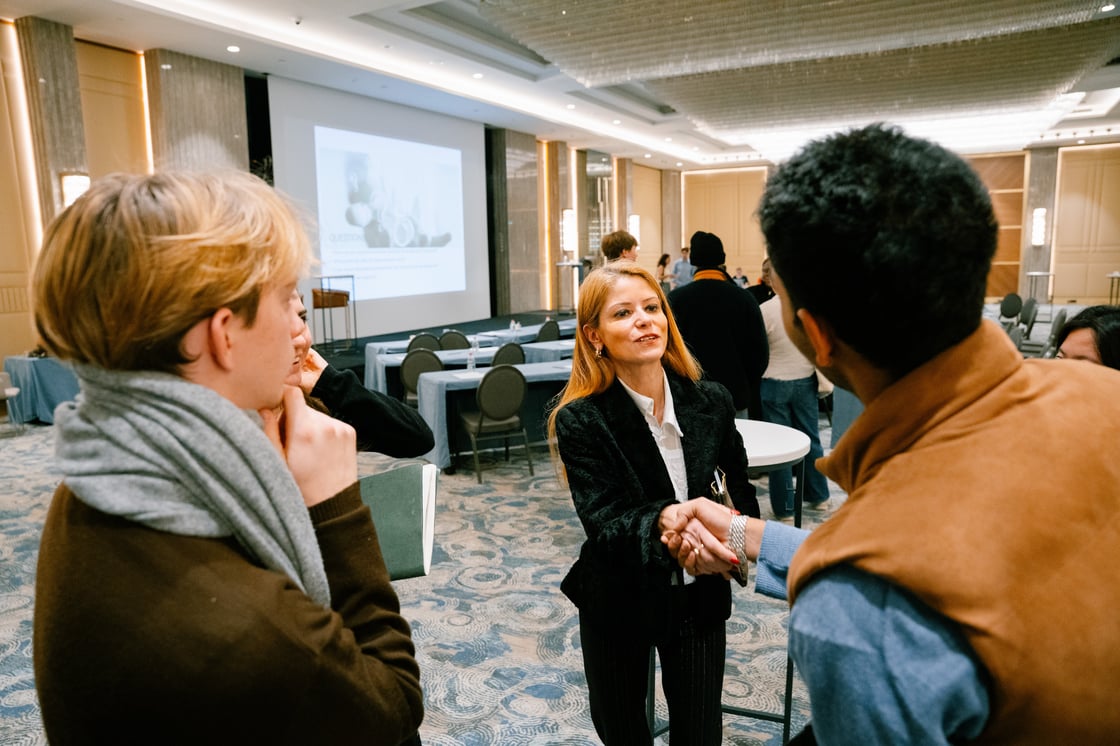
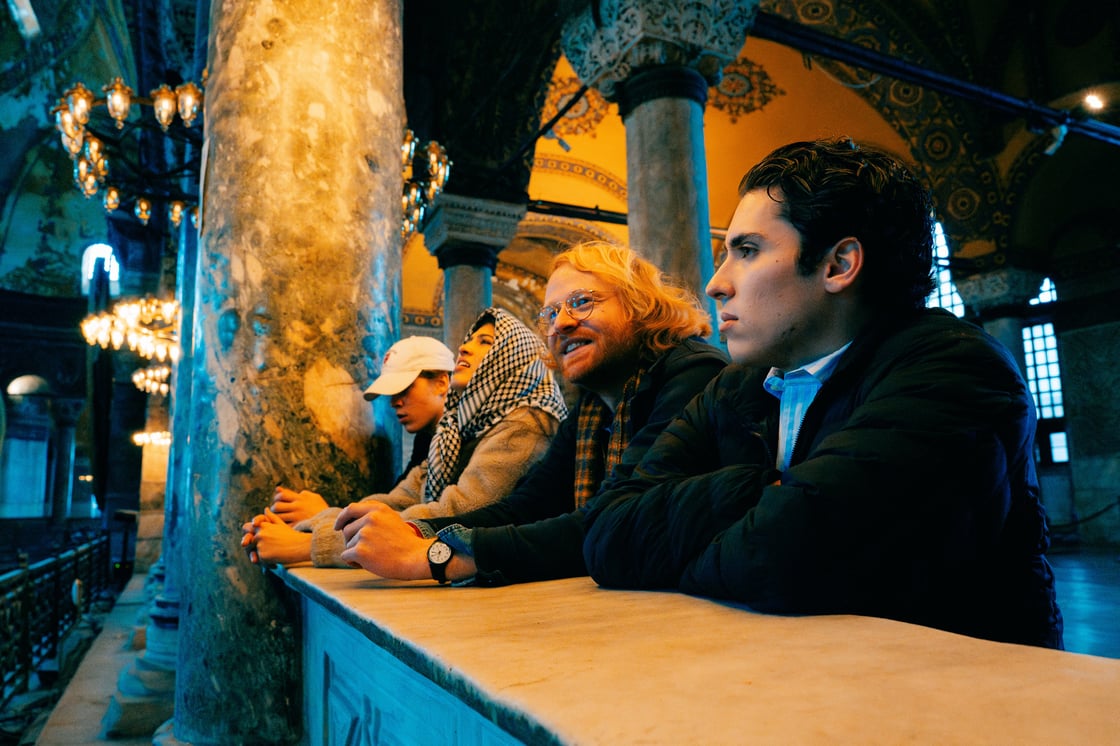
Our Scholars began their time in MENA in Istanbul, at the intersection of two continents. Their time included visits to iconic mosques, trips across the Bosporus, and of course, no shortage of insight and dialogue from and with our Morning Program Speakers. They were in dialogue with truly a dazzling array of speakers: artists, curators, journalists, and finance leaders.
MORNING PROGRAM

SITE VISITS & AFTERNOON OPTIONS
Istanbul has no shortage of galleries and museums. Here is a selection of what they did and where they journeyed through:

FELLOWSHIPS
A Baret Fellowship can be anything: a step into the past or the future, into the equally rarefied air of one of the world's great mountains or a Silicon Valley boardroom. In MENA, our Scholars were in touch with cutting edge technology at Universities dedicated to Artificial Intelligence and Innovation, as well as with ancient cities cut into the walls in hills of Turkey. In MENA, our Fellowships truly presented a panoply of options across disciplines:
Tracing Civilizations in Cappadocia & Ephesus
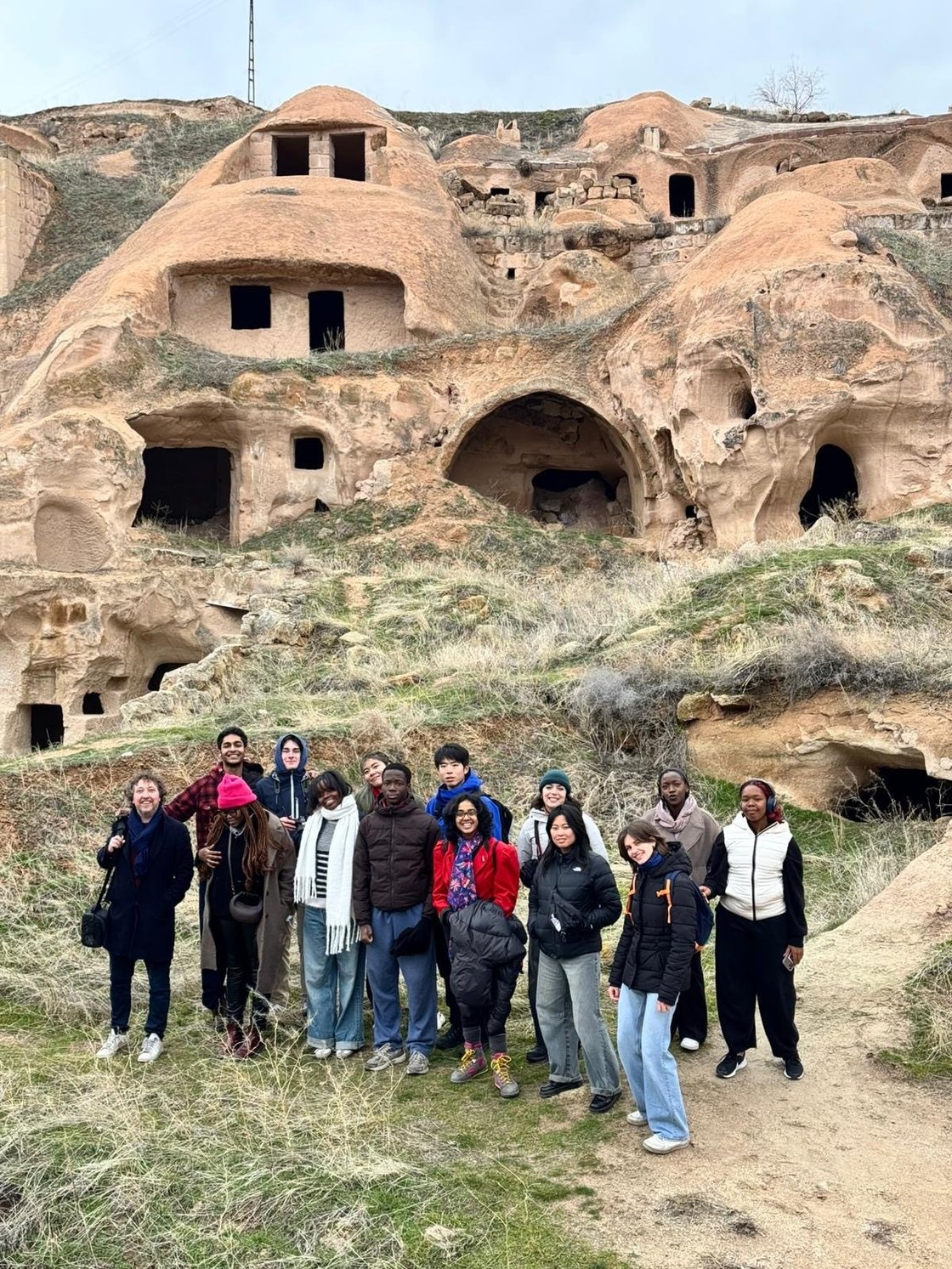
A group of Baret scholars, led by Fellow Ronan MacRory and Associate Dean Claudia Kahindi, traversed the land between Ephesus and Cappadocia, home to some of the most ancient civilizations known to history. They began in Gülşehir, where they visited the Church of St. John, one of the earliest examples of Byzantine rural art, providing an intimate introduction to the spiritual and artistic traditions of Cappadocia.
Their second stop was Açıksaray Harabeleri, a quiet, rock-cut settlement in Cappadocia that reveals the raw process of early Christian architecture carved into volcanic tuff. They continued on to hike through the Red Valley, following winding paths between sculpted rock formations softened by snow, opening onto spectacular viewpoints over the winter valleys. They continued on to Kaymaklı Underground City Underground City, one of the largest and most sophisticated subterranean settlements in the area. These vast complexes once sheltered up to 60,000 people for extended periods, offering a powerful glimpse into the ingenuity and resilience of their inhabitants.
Their journey through antiquity continued in the ancient city of Ephesus, one of the best-preserved ancient ruins in the world. They visited the Basilica of St. John, believed to be the final resting place of the apostle St. John, as well as the Temple of Artemis, one of the Seven Wonders of the Ancient World. They stepped into the Great Theatre, where scores of spectators once observed gladiatorial contests and performances, as well as the Ephesus Archaeological Museum, brimming with artifacts from the ancient city, including sculptures, inscriptions, and everyday items that give insight into life in Roman society.

Jeddah: Where Heritage Meets the Future
— Creativity, Voices, and Vision 2030
This Fellowship, led by Tom Snow and Wendy Lin, invited students to gain first-hand experience in a city where heritage and modern ambition sit side by side. By engaging with local talent, innovators, and institutions, students developed cultural awareness, creative skills, and valuable networks that equip them for future academic and professional pursuits.
In the historic center, scholars encounter the roots of Hijazi identity: coral-stone buildings, community stories, and traditions that shaped the Red Sea world. Nearby, new districts, creative studios, and industries reveal how Saudi youth, women leaders, filmmakers, and researchers shape a modern future.
With the support of Jeddah’s Development Authority, this program immerses students in local storytelling, creative production, and the architecture of transformation. Participants will gain practical insights and experience, learning directly from those who balance tradition and innovation in Saudi society. Our Scholars visited Lucid Motors, one of the premiere manufacturers of electric vehicles in the world. They also made excursions to King Abdullah University of Science and Technology (KAUST) and Effat University, finding dialogue with faculty in students with a focus on film, photography, animation, architecture, and heritage-based design.

Designing the City of the Future – Innovation & Cyber Strategy in Abu Dhabi
As a leading innovation hub, the UAE lets students study how nations build technological ecosystems at scale. Abu Dhabi’s rapid modernization shows deliberate choices in national identity-building and digital governance. Policymakers also prioritize AI integration and cyber strategy. Curated visits, guided discussions, and field observations help scholars see how policymakers balance ambition with security, weigh cultural values against technological change, and navigate the realities of planning versus implementation.
Our Scholars, led by Manka Bajaj, made excursions to Sheikh Zayed Grand Mosque and the sparkling palace of Qasr Al Watan. They were privileged to also meet with a guest speaker from the UAE National Water & Electricity Group, who specializes in the Nuclear Sector, to understand alternative approaches to energy in a world in flux. Technological innovation was a special focus: they also visited the Technology Innovation Institute, and were invited into research sessions and explored their laboratories. Finally, they toured the Mohamed bin Zayed University of Artificial Intelligence (MBZUAI) in Masdar City to see the cutting edge of this new, transformative technology.
And of course, the trip would not have been complete without some fun: a desert safari, including dune bashing, sandboarding & camel rides.

Mountains, Markets & Memory in Marrakech & the High Atlas
On their Fellowship to Morocco, led by Weronika Brzezinska and Luis Haddad, our Scholars began in the dusty hub of Marrakech, with its iconic markets, mashrabiya trellis windows and ubiquitous mint tea. From there, they journeyed across the deserts of the Sahara to the High Atlas—home to Imazighen communities—where terraced fields, earthen dwellings, and mountain trails reveal enduring bonds between people and land. Beginning in Zawiya Ahansal, a nomadic commune of over ten thousand people, they learned about the region’s biodiversity – blessed at this time of year with snow, among the coniferous forests – and immersed themselves in the culture of the Imazighen people, North Africa’s indigenous communities. Along the way, they witnessed firsthand the resilience and traditions that have shaped life in these mountains for centuries. With the guidance of the Atlas Cultural Foundation, they engaged in weaving workshops, language exchange, cooking, and gardening with the community.
From there, they continued on to Taghia, a remote village set in a gorge that is a destination for ambitious climbers, where they were welcomed with traditional Ahidous music and dancing with local musicians, and spent time in the local springs, which irrigate the local agriculture.
It was a journey across three biomes, a journey across time and across cultures, and our Scholars approached it with curiosity, respect, and open-mindedness.
Across Coastlines & Ancient Paths on the Lycian Way: Antalya
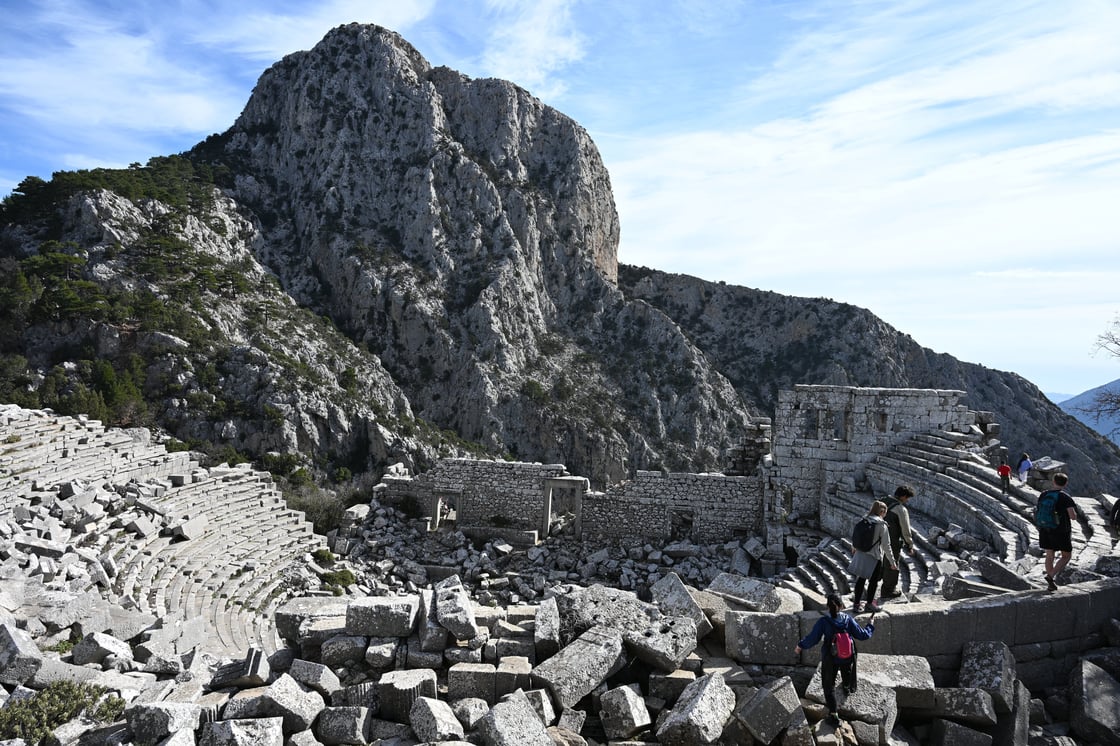
On Fellowship in Turkey, led by Himraj Soin, our Scholars followed the Lycian Way along the coast of the Mediterranean, an ancient path through time and space, where the ancient civilization of Lycia once ruled, dating all the way back to the Bronze Age.
They journeyed through Anatolia’s most impressive classical sites: Aspendos, famed for its remarkably preserved Roman theatre, and Perge, where colonnaded streets, baths, and stadium evoke the grandeur of a prosperous Roman city, as well as Xanthos Ancient City, the former capital of Lycia. They entered evocative ruins of ancient Lycian Olympos, scattered along a riverbed and partially hidden by vegetation. They even stepped into the church and tomb of St. Nicholas of Myra—the 4th-century bishop whose legacy inspired the figure of Santa Claus. The site offers a quiet, contemplative atmosphere and a powerful connection to early Christianity in Anatolia.
Nearby, they explored Myra, once one of the six major cities of the Lycian League. Carved high into the cliffs, the iconic Lycian rock tombs overlook the valley, while the Roman theatre below speaks of Myra’s political and cultural importance in antiquity. While following the coast, scholars contemplated the depths of the annals of history and considered their place in them.
We hope this look into the Baret year has been enlightening and heartwarming. There will be more learning and adventure commencing in just a few short weeks. Until then.

NEW YORK
SAO PAULO
PARIS
ISTANBUL
NAIROBI
DELHI
BEIJING


