

December 19, 2025

By Bhagyashree Prabhutendolkar
What does it mean to use our lives for social good?
What does it mean to build an organisation rooted in the power of kindness?
In São Paulo, Baret Scholars had the privilege of visiting the International Committee of the Red Cross (IRCC) and receiving First Aid and Emergency Response Training. For someone who has always been curious about how humanitarian organisations function, it was a rare opportunity to get first-hand insights from humanitarian workers themselves.
Before the training, we had a session on humanitarian action with Jorge Wolney Atalla Jr., President of the Brazilian Red Cross of São Paulo.
Red Cross, as he explained, is an organisation rooted entirely in kindness.
“Our belief in kindness has deep roots — it goes all the way back to the beginnings of the Red Cross Movement.”
In 1863, the International Red Cross and Red Crescent Movement was born, inspired by a Swiss businessman named Henry Dunant. After witnessing the aftermath of the Battle of Solferino in 1859, Dunant was shaken by the sight of thousands of wounded soldiers abandoned without care. Their suffering moved him deeply. He proposed forming national volunteer groups who could step in with compassionate assistance whenever war brought pain and chaos. These ideas led to the creation of a committee in Geneva, which later became the International Committee of the Red Cross.
Like many others, we had assumed that the Red Cross symbol came from the Christian cross — but it turns out the emblem has no religious affiliation. It simply inverts the Swiss flag, honouring Switzerland’s role in creating the first Geneva Convention. Its red colour signifies neutrality, hope, and the protection of medical personnel in conflict zones.
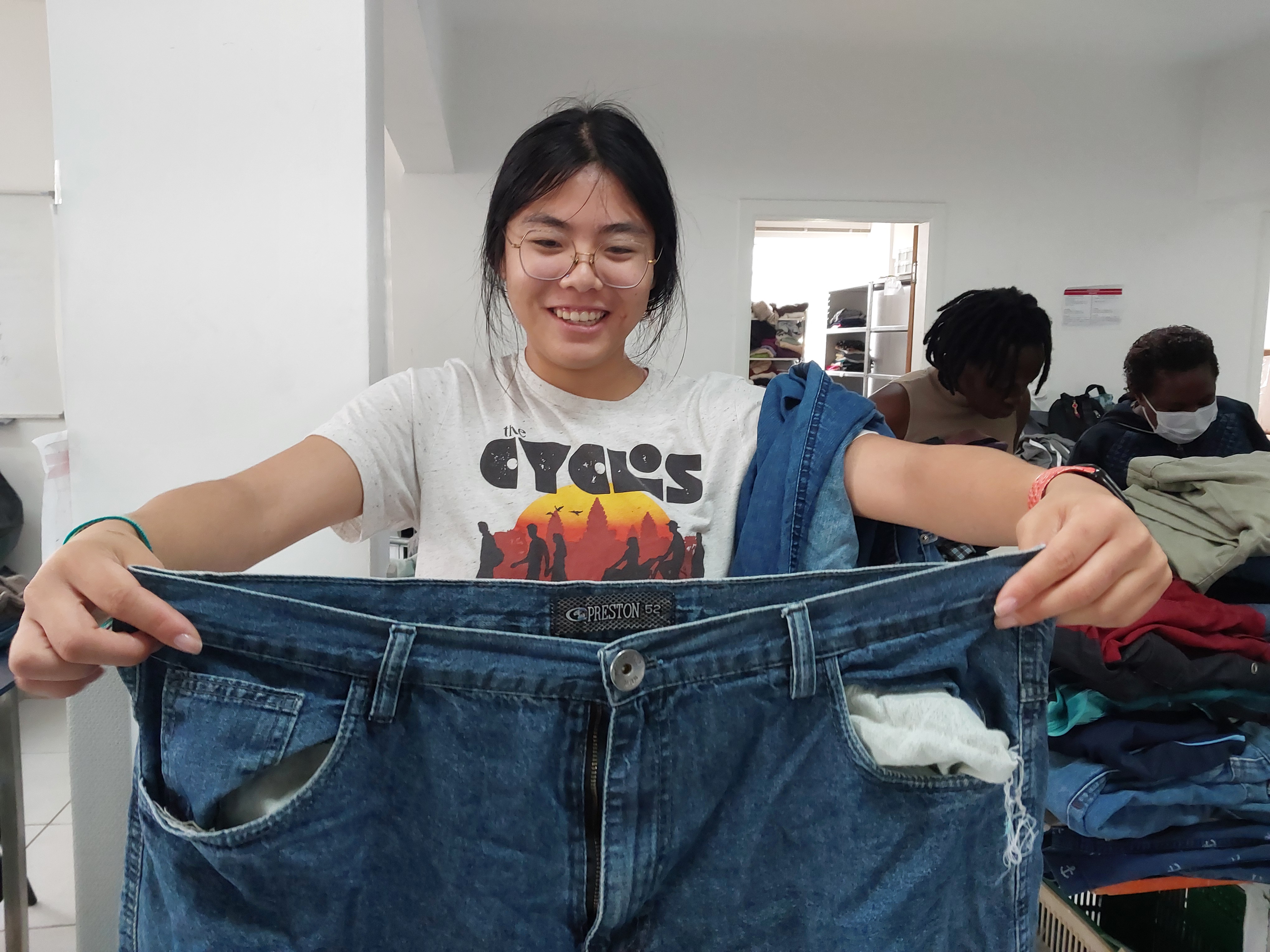
When we first arrived at the IRCC building on a chilly morning in São Paulo, I didn’t realise how much this day would teach me. We entered the space around 10 a.m. and took a short tour of the campus. After an initial briefing on humanitarian work and crisis response, our training unfolded in two segments.
In the volunteering segment, we could choose between packing food parcels, helping in the laundry, or working in donations. I chose the Laundry section (because why not!) along with six other Baret scholars. We did laundry for around three and a half hours, but time passed quickly as we bonded over folding clothes and the cause. All garments collected for donation are washed, ironed, and folded before being distributed to those affected by crises. As we worked and chatted with the humanitarian staff, we received candid insights about what volunteering truly means.
Volunteering, as we learnt, is an action driven by a simple desire to use our lives to serve others. The act is humble and seeks no recognition — no applause, no spotlight — just the joy of giving. One worker said that today many people volunteer for visibility: they show up for a day, take pictures for social media, and disappear. But true service doesn’t ask for attention.
As they put it: “The deepest acts of kindness are the ones no one ever hears about. They shine in silence, not in applause.”
The second segment was the most exciting part — First Aid and Crisis Response. Two humanitarian workers demonstrated CPR and first-aid techniques for choking and bleeding using mannequins. The lessons were intense, and we had to pay attention to every detail because even small mistakes can cause serious harm.
By the end of the day, I realised just how much strength, precision, and emotional resilience humanitarian work demands. It is not glamorous. It is not simple. And it is certainly not easy. But it is deeply human.
I walked out of IRCC with a heart full of respect for those who choose to step into chaos, who run towards suffering instead of away from it, and who offer their hands not because someone is watching, but because someone is hurting.

NEW YORK
SAO PAULO
PARIS
ISTANBUL
NAIROBI
DELHI
BEIJING


