

September 15, 2026
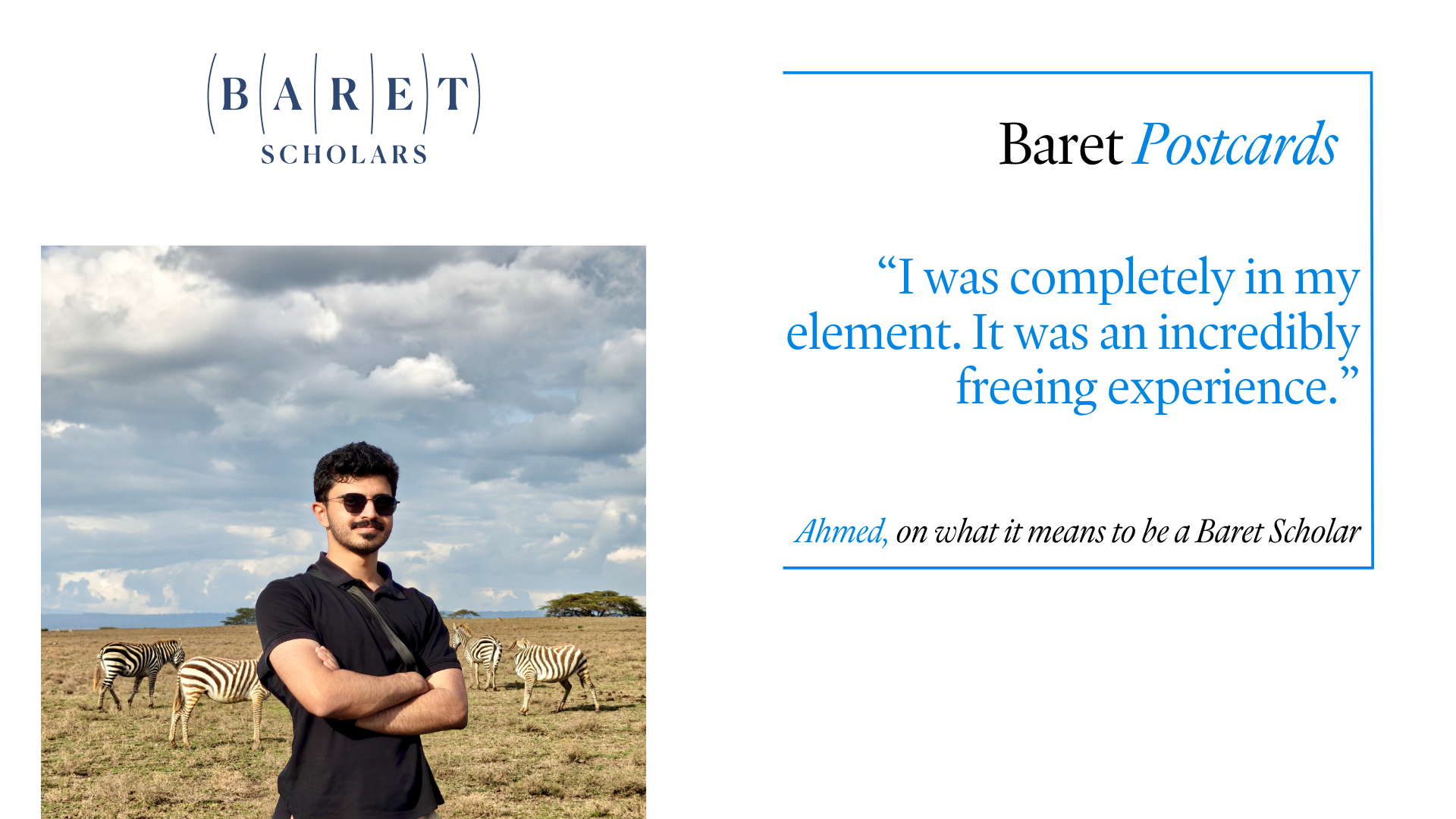
Ahmed, a Baret Scholar from Karachi, Pakistan, is a testament to the power of a gap year. Transitioning from a home-based online schooling experience to Baret's global journey across seven regions, Ahmed went outside his comfort zone and grew in ways he never would have imagined were possible.
We sat down with Ahmed to discuss how he overcame the fear of falling behind, how he found his rhythm in a global cohort, and how he turned his daily personal routines—from practicing handstands to learning Mandarin—into a deeply meaningful Capstone project.
Ahmed, you have a very unique schooling background compared to many students who join Baret. You did "school at home" in Karachi, but you’ve mentioned it wasn’t homeschooling in the traditional sense. Can you explain the distinction?
In Pakistan, it's very common to go to school, then go to a separate tutoring center. Because of the pandemic, I was already going to private tutoring. But when I realized that I was doing almost all of my actual learning at tutoring, I went to my parents and said, "Hey, what if I just go directly to my tuition teachers, set up a proper school schedule, and do it from home?" We did that to complete my O levels and then carried it into my A levels. It worked out incredibly well.
Traditionally, many students in Pakistan head straight to university in the UK or US after high school. What was going through your mind?
I was guong-ho to go straight to college. I had started school a year late due to my mother’s health, and then I lost a year to COVID and my school’s initial Zoom inefficiency. So I felt like I was already two years behind. I was so impatient—I was even looking into accelerated degree programs.
How did Baret Scholars enter the picture, and what made you change your mind?
In the winter around October or November, a family friend from the New York area heard about Baret Scholars and shared it with my aunt. When she told me, my first reaction was, "This sounds amazing—for someone else! I’m not the right fit because I’m already behind." But he pushed me to sit down and actually read the program documentation on the website. Once I did, I realized how incredibly well-thought-out and exclusive the opportunity was.
What was that transition – from a quiet home environment to navigating the globe – like for you?
I was completely in my element. It was an incredibly freeing experience—no longer being confined to a school building or reporting every detail back to my parents.
The moment it truly hit me was during our fellowship in Peru. We were hiking through the Andes, and I had never experienced nature like that before. Growing up in Karachi, which is a highly industrial city full of concrete buildings, going out into nature is very difficult. Standing in one of the most beautiful places in the world, having never been on a proper hike before, I just felt incredibly lucky to be there.
From that point on, I lived in a constant flow state.
Is that flow state something you’ve always had, or did this year unlock it?
It’s always been a part of me, but this year tested and strengthened it. For me, the key is patience and keeping an open mind. I always tell myself that doing 5% of the work is better than 0%. If you put in a little bit of effort every day and allow plans to change, things get better.
I don’t go into things with heavy expectations; I just go where life takes me.
Friendships are often the "meat and potatoes" of the Baret experience. Having come from a remote learning environment, how did you navigate the social dynamics of the cohort?
Friendship was definitely one of the most fundamental parts of the year for me. I had a very a comfortable, close friendship with Jiaxin, Jackie, and Bhagyashree. Our bond really solidified during a weekend trip to Rio in Brazil. We couldn't find a house big enough for a massive group of 12, so the four of us split off into our own house. That weekend spent together, just the four of us, made us incredibly close, and we ended up taking several side trips together later on.
During our fellowship in Morocco, we were all separated, and I was placed in a group with people I hadn't interacted with as much. It turned out to be one of the best times of my life. It flipped a switch in my brain; I became much more outgoing.
Let's talk about your Capstone project. Many incoming students feel a lot of anxiety about what to choose. How did yours develop?
My family comes from a strong literature and liberal arts background. Because I was passionate about visual arts and 3D animation, they actually pushed me toward Baret to give me a broader liberal arts perspective before I committed to a specialized animation college. The program didn't change my career trajectory, but taking a break from the computer screen actually made me much more passionate and excited to get back to my art.
My Capstone evolved a lot over the year. Initially, I wanted to do a traditional photography and art piece representing each region. But I also wanted to spend every single day exploring. Sitting down to work on a desktop or a notebook just didn't click with me. So, I shifted my Capstone to focus on three personal routines I was already doing naturally every day: learning Mandarin, practicing handstands, and taking a daily photo.
Those are three very distinct disciplines. How did they play out during your travels?
Learning Mandarin was a personal goal because I already speak the first and third most spoken languages in the world, English and Hindi, so adding the second felt like becoming a master of communication! I started practicing a little bit every day. By the time we reached China, I was confident enough to have small, daily exchanges with shop owners and restaurant staff. My favorite memory was when I helped a fellow scholar who was vegetarian communicate with a waiter to ensure a dish was made without eggs—all without needing a translator app. It was an incredibly freeing feeling.
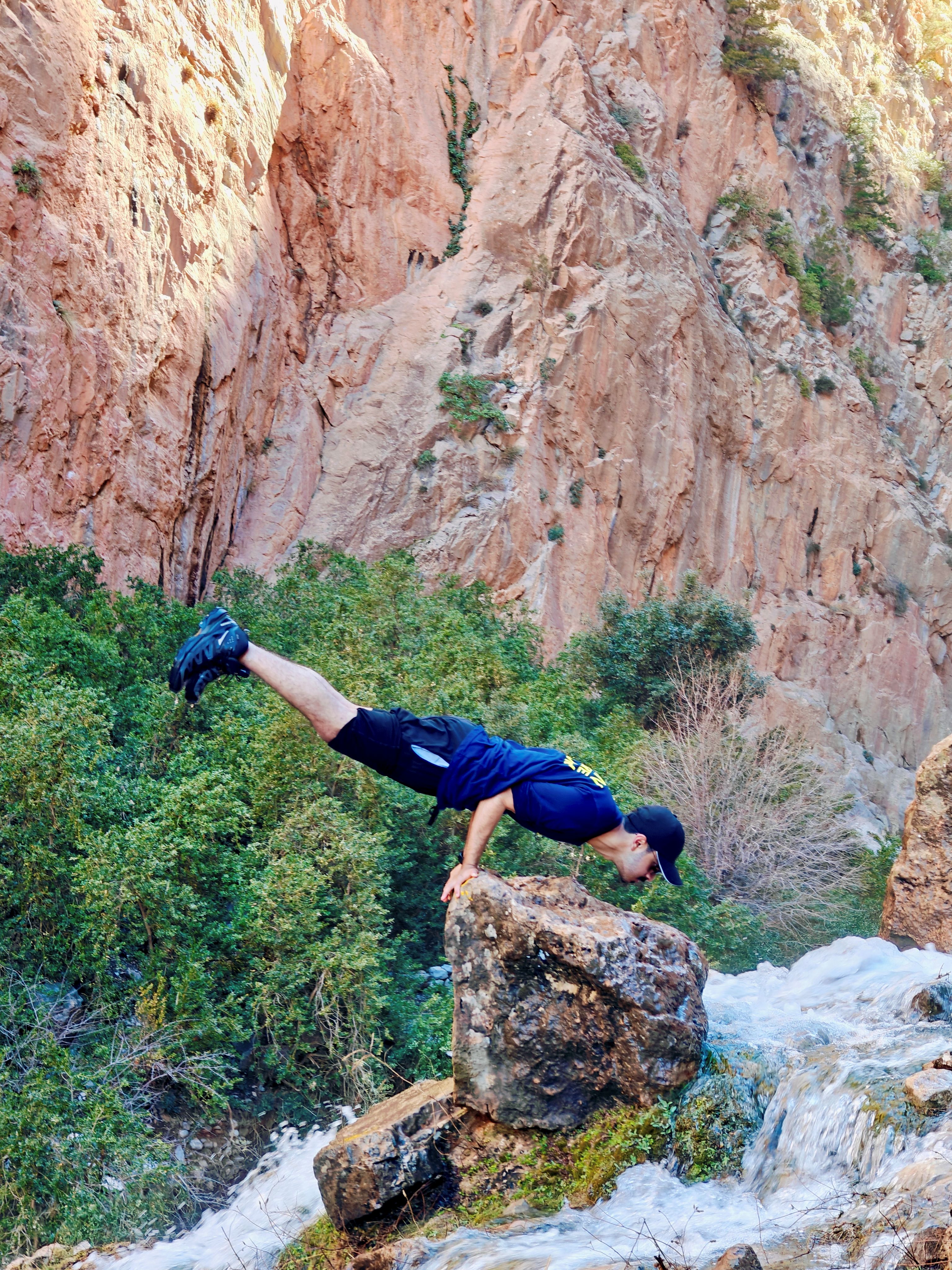
As for the handstands, it was born out of my calisthenics routine to stay fit on the road. I practiced against a wall every day during the first term. By the time we were in Morocco, looking at this beautiful mountain, I decided to try it without a wall. I thought, "If I fall, I fall." I kicked up, held the handstand, got an amazing photo, and landed safely. From then on, I became "the handstand guy," finding beautiful locations around the world to practice. In Kenya, during a Capoeira class, the instructor challenged us to do a handstand walk. I tried the advanced version and actually managed to do it. I hadn’t known I had it in me. That’s Baret for you. You surpass limits you didn’t even know you’d set for yourself.
Ahmed, your journey is an incredible testament to the difference a year with Baret makes. Thank you so much for sharing your story with us.

NEW YORK
SAO PAULO
PARIS
ISTANBUL
NAIROBI
DELHI
BEIJING


